Heartburn on an Empty Stomach: Why Skipping Meals Backfires
Luke McKnight, Founder, GERDBuddy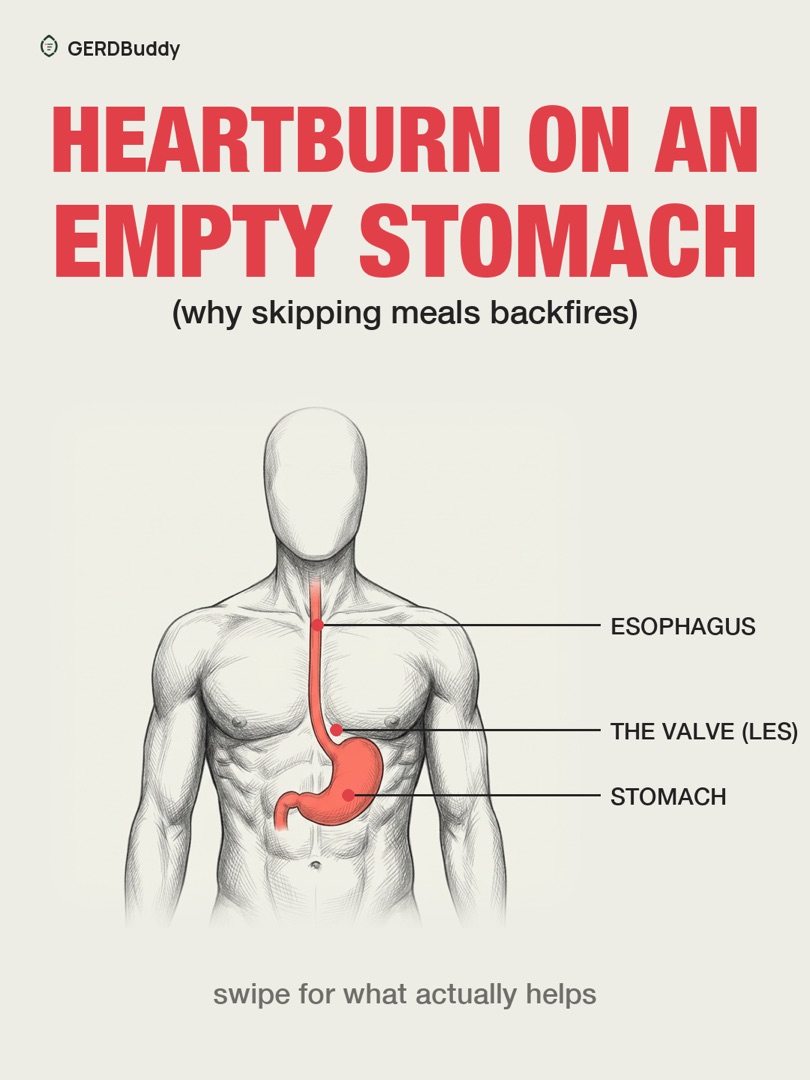
It feels unfair: you haven't eaten anything, and you're still burning. There are a few good reasons why.
Your stomach never clocks out
Your stomach keeps making acid even when there's nothing in it. No meal doesn't mean no acid. It just means nothing is there to soak it up.
Food works like a sponge
When you eat, food mixes with stomach acid and buffers it, so for a while it's less harsh. On an empty stomach nothing buffers it, so any acid that creeps up into your esophagus hits at full strength.
The starve-then-feast trap
Skipping breakfast and lunch, then eating a huge dinner, is the worst combo. A stretched-out stomach makes the valve at its top relax more often, and every relaxation is a chance for acid to escape upward. Long gaps followed by big meals give you the worst of both. Our eating habits guide covers portion and timing in more depth.
Coffee before food
Coffee is one of the most common triggers people report, and a lot of us drink it first thing on nothing. The research on coffee is mixed, and plenty of people with reflux drink it fine. So test yours: have it after breakfast for a week and see whether mornings feel different. More in GERD and coffee.
Small meals, no long gaps
Eat something small every few hours instead of two giant meals, so your stomach never gets too empty or too full. Easy picks that are gentle on reflux:
- Oatmeal
- A banana
- Toast
- Plain yogurt
Not sure what's safe to grab when you're running on empty? GERDBuddy can scan a photo of a meal to show its reflux score and likely triggers before you eat.
See a doctor if
- The burning eases when you eat, then comes back
- It wakes you up at night
- You notice black or tarry stools
- You're losing weight or vomiting
Burning on an empty stomach can also be gastritis or an ulcer, which need different treatment. A doctor can tell them apart.