Why Acid Reflux Makes You Cough (Even With No Heartburn)
Luke McKnight, Founder, GERDBuddy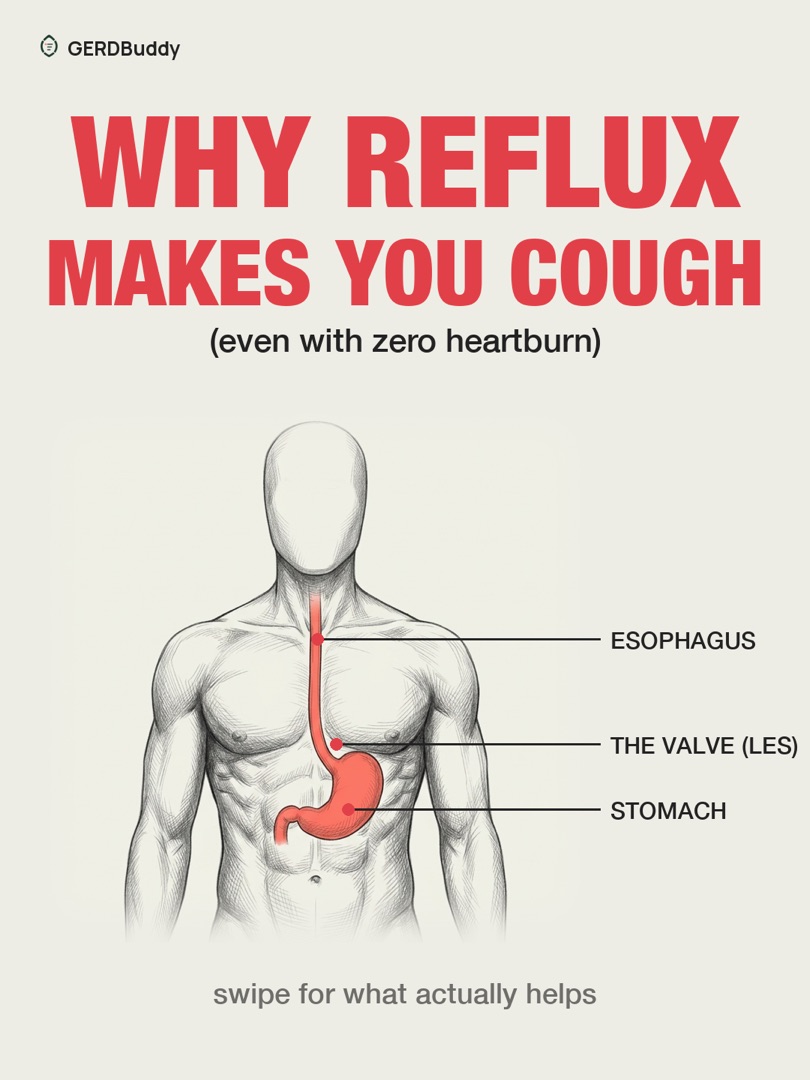
A cough that hangs on for weeks usually gets blamed on allergies, a cold that never quite ended, or post-nasal drip. Reflux is one of the common causes people miss.
How reflux sets off a cough
Acid mist can reach your throat. Reflux doesn't have to be a big splash. A fine mist can travel past the esophagus up to the voice box, and throat tissue is far more sensitive than the esophagus. A tiny amount there can trigger a cough. This is often called silent reflux, or LPR. Our guide to LPR covers it in detail.
It doesn't even have to reach. The esophagus and the airways share the vagus nerve. Acid low in the esophagus can fire that nerve, your airways get the signal, and you cough, even though the acid never came near your throat.
No heartburn required. Many people with a reflux cough never feel heartburn at all, which is exactly why it goes unnoticed.
The cough feeds itself. A hard cough squeezes your belly and pushes up on your stomach. That pressure can push more acid up, which means more coughing. That's how it turns into a loop.
What helps
Raise the head of your bed 6 to 8 inches. Lying flat lets reflux travel further up. Risers or a foam wedge work; stacked pillows don't.
Finish dinner 3 hours before bed. People who went to bed within 3 hours of dinner were about 7 times as likely to have GERD as people who waited 4 or more hours. If your cough is worst at night, move dinner earlier first.
Find the meals that set it off. Log what you ate before a bad coughing day. GERDBuddy can scan a meal before you eat it to show its reflux score and the likely triggers.
See a doctor if
- Your cough lasts 8 weeks or more
- You cough up blood
- You're short of breath or wheezing
- You have a fever or lose weight without trying
- It hurts or sticks when you swallow
Asthma, post-nasal drip and some blood pressure medicines also cause chronic cough. A doctor can tell them apart. If you also have asthma, see GERD and asthma.